25 September 2033

Welcome to the West Ham Battalion Website


"Up The Hammers!" e-book is now available!

Read the true story of the West Ham Battalion volunteers in the Great War.

A century ago some of them were employed at the Thames Ironworks while many of them supported their local team with a flat cap passion. All the men came from within West Ham Utd’s traditional areas of support, from Stepney to Silvertown, Leyton to Limehouse, Barking to Bow and everywhere in between. A few of them were underage (while many were actually overage!) but they all stood up in January 1915 and volunteered in the Hammers to defend the things they held dear. Not many of them came home.
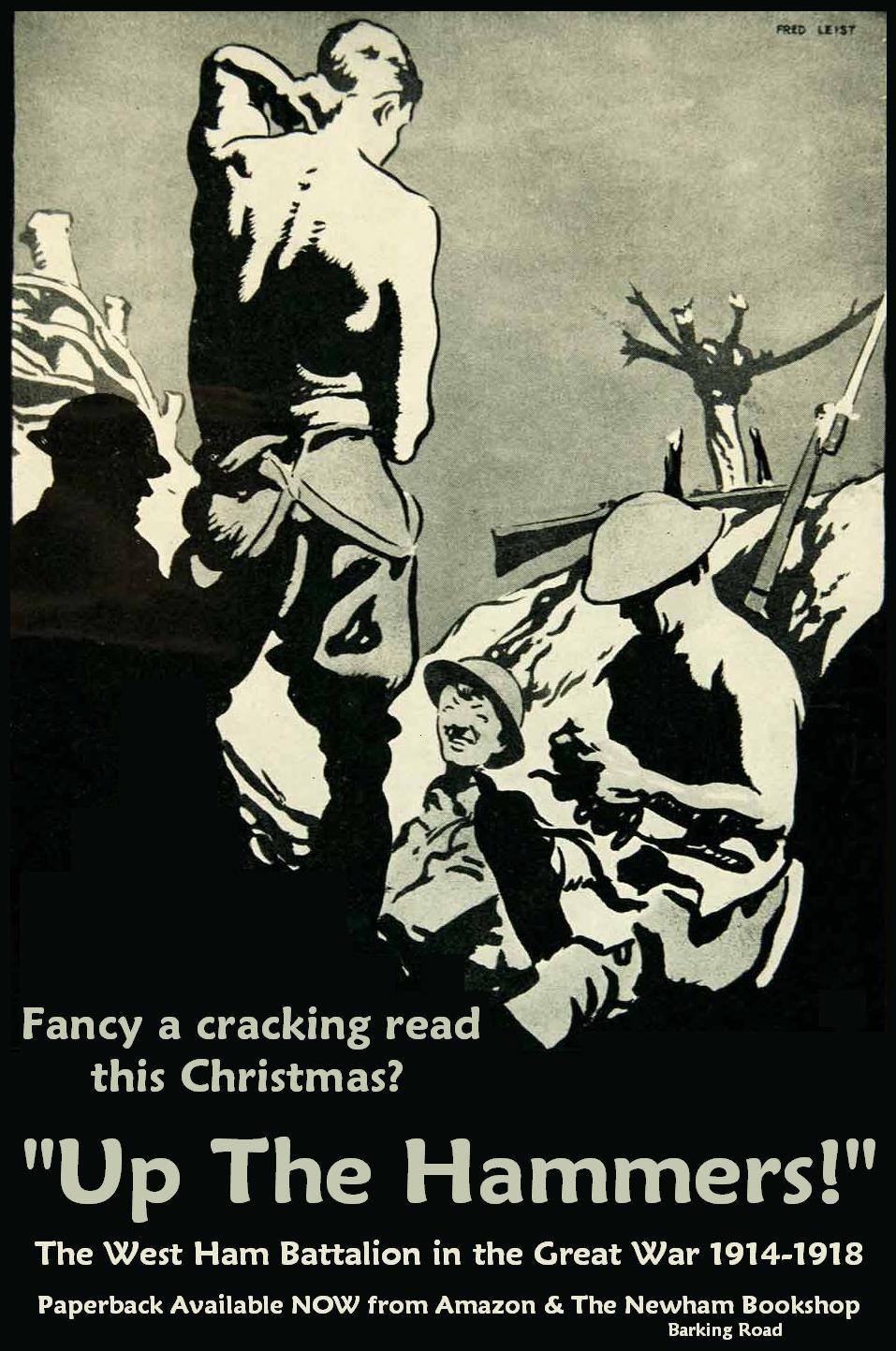
Read this exciting untold story and share in their pride and sadness, the good times and bad – from basic training on Wanstead Flats and route marching along Green Street in 1915 as riots erupted around them, through to the deadly meat-grinder of the Somme in 1916 and finally their epic last stand at Cambrai in 1917 – the same year West Ham Utd had won the Southern Combination League on April 28th.

On this same day, the West Ham Battalion attacked alongside their regular partners on the battlefield, the Footballers.  They were also volunteers, from the world of professional football and had stood beside the Hammers since training. Among their ranks was Bob ‘Pom-Pom’ Whiting, born and raised in Canning Town and formerly the Thames Ironworks goalkeeper. He was playing for Brighton when he enlisted and was legendary for his long kicks (a pom-pom was an anti-aircraft gun!)

At around 5am on the 28th April 1917, the Hammers and the Footballers attacked the village of Oppy and were decimated by well prepared Germans. Bob Whiting was dead, as were nearly a quarter of the West Ham Battalion and the Footballers. That afternoon, West Ham Utd beat Portsmouth 5-2 at the Boleyn and were crowned Champions, ahead of Millwall, Chelsea, Tottenham and Arsenal.

It’s a story every West Ham supporter should know and goes a long way to explain the reasons behind the memorial plaque to the Hammers beside the club shop entrance. Over a decade of research has revealed long forgotten people and memories. For example, an official request was made in early 1915 to the War Office for the cap-badge of the battalion to be two crossed hammers!

It’s a story of local pride, the like of which will never come again. Through official documents, eye-witness accounts, diaries,  newspaper reports and over 60 never before published photographs of the West Ham Battalion you will discover the men, their private and collective battles and their ultimate fate.

Available now, in e-book format, from Amazon Kindle
(also available for PC, phone etc via a free reader download at amazon)


For those of you new to the blog, use the 'older posts' menu on the right of the page to see all the previous posts. Please feel free to leave comments to any posts - the only problem is I cant quite work out how to reply! I am contactable directly on the email address in the 'about me' section. If your relative served in the Hammers Battalion, we'd really love to hear from you!


Now on Facebook: send a friend request to 'West Ham Pals'!
Please ask permission before using ANY images seen here!


Remembering
Private Robert Hayes of
6 Platoon, C (Essex) Company, 1st Battalion The Royal Anglian Regiment who was killed in Afghanistan on Sunday 3 January 2010.
Remembering Lance Corporal Adam Paul Drane, Section Second-in-Command within C (Essex) Company, 1st Battalion, The Royal Anglian Regiment, killed in Afghanistan on Monday 7 December 2009.

31 May 2012

Pte 18303 Walter Hardcastle

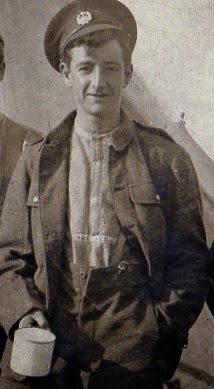
Walter Hardcastle was born in Leyton in 1897, the son of a gasworks lighterman and a dress machinist. By 1911 he was living at 15 Radlix Road. He was an original volunteer in the West Ham Battalion and served with them from initial training over on Wanstead up until final disbandment in early 1918 in France. I have an idea that he was a member of the HQ Company, part of C Company.

(copyright: Jeff Hardcastle)

On disbandment, Walter was transferred to the 10th battalion of the Essex where he went on to display great bravery in the later stages of the war, which was rewarded with not only the Military Medal but he was also honoured by the people of France who awarded him the Croix Du Guerre.

Walter died, aged 63, in 1960.

The Hammers Stretcher Bearers

Some of the bravest among the brave in the first world war were the stretcher bearers.

By the time the West Ham Battalion arrived in France (December, 1915) Norman William Bellinger was regarded by everyone as a good soldier and had been appointed Lance Corporal, and placed in charge of the medics under the direct command of Dr Alan Holthusen, the Medical Officer. Holthusen was a locally born GP surgeon with a practise in Wanstead and his younger brother Len was also in the Hammers, living in Forest Gate and serving as the Signals Officer (and current battalion snooker champion).


Norman Bellinger was 28 when he enlisted at the Hammers recruiting office in East Ham early in January 1915. He was one of those listed on the front page appeal for volunteers in the Stratford Express. Married on Christmas Day in 1909 to Lillian, and living with their young daughter at 33 Howard Road in Barking, Norman worked in a local india rubber factory as a labourer. He was short, yet very strong.

By April 27th 1916, the Hammers were in and around the modern-day town of Grenay in northern France. The German's launched one of the everyday hazards of trench life - mortar bombs, silent in flight and deadly on impact. During the attack, 38 year old Pte Joe Cooper was gravely injured. First on the scene was Norman Bellinger, who began wrapping Joe up in bandages. The two men then came under further mortar fire, which hit Norman himself in three places and no doubt made Joe's situation a whole lot worse.

With further brave assistance from the other stretcher bearers, the two wounded men were brought in. Norman had made every effort to save the badly injured Cooper despite bleeding heavily from his own wounds. Sadly, Joe didn't survive and wouldn't return to his native Limehouse. Today he's buried in the Loos British cemetery.

Norman recovered enough to continue exhibiting incredible bravery. Less than a fortnight later he dashed out, still patched up, to assist L/Cpl Jimmy Dutton from Plaistow who had been hit in a very similar attack. Norman picked him up and carried him back but he was already dead. For this action, he was one of the earliest men in the war to be awarded the Military Medal.

By June 1st, when the Germans blew three huge mines right on the Hammers front, Norman was one of the stretcher bearers picking up shattered men from the moonscape battlefield while under fire. They were all taken to Dr Holthusen's aid tent which practically became the Brigade Aid Post in the chaotic attack. Holthusen treated over 90 men from three different regiment's that night but they couldn't be moved out to the proper care they urgently required as the shelling on their positions was "intense". By the morning, as the shelling lessened, Norman was transferring them to lorries and off to hospital.

At the end of July, the West Ham Battalion were on the Somme and engaged in blocking the almost suicidal counter-attacks being made by the Germans against Deville Wood. 'The Devil's Wood', as it was known by the Tommys, was a desperately hellish place to be. Many Hammers were killed over their few days in the frontline, not many have known graves. Those that do were brought in by Norman and his stretcher bearers. Norman was seen to be tireless. He didn't care about sleeping, he didn't care about eating. He simply cared about getting those men off that horrendous battlefield. We'll never know how many men he saved or who today have a known grave thanks to him and others, but Norman's actions were enough for him to be awarded the Distinguished Conduct Medal.

When Colonel Papillon had his breakdown from shell shock at the end of the Somme Summer of 1916, it was Bellinger who personally led him home and back to his wife at Catsfield Place in Sussex. Norman then had an extended leave to recover himself before he transferred over to the Labour Corps.


Another of the stretcher bearers was Charlie Gladding. He was one of a number of men who lived in Tidal Basin, under the shadows of the world renowned Thames Ironworks. A large group of men from these streets joined the West Ham Battalion and among them was 22 year old Charlie who lived with his new teenage wife in Alice Street.

He worked closely with Norman Bellinger in rescuing those lads mown down on the battlefield, but by the end of Summer 1916 after their tour on the Somme, Charlie Gladding's spirit broke. Like so many men, he suffered a nervous breakdown. Sent home to his wife, he eventually recovered, and was then posted to the Labour Corps, serving overseas in Salonika. Sadly, it was here that he caught pneumonia in September 1918, just a few months before the end of the war, and died.


At the end of war, Norman Bellinger was classed as 50% disabled from his wounds and went home to Barking, in a new house at 28 Shaftesbury Road. He died in early 1963 having lived to be 76 years old.


Sadly, I've not yet found a photo of these brave men. But I cant help admiring Bellinger's bravery, as Joe Cooper was my Gt-Grandfather...


18 May 2012

400393 Pte Breeze, 'A' Coy, 4th Platoon


Alfred Richard Breeze was born at Buckland, Dover and lived there until 1912.

He lived in Tonbridge with his wife and daughter at 15 Albert Road. He was a Draper at the local Co-Operative.

Breeze was another conscripted late replacement to the West Ham Battalion. It is unclear when he arrived, but likely at some point between January and April 1917.

He was a member of A Company, which at the time of the German attack on the Hammers during the Battle of Cambrai were located in support of B Company at Lock 5 and under an intense artillery barrage.

 'A' Company trench raiders, Alfred is second left, back row

Pte Webb, another late replacement to the Hammers, and member of A Coy's No4 Platoon, describes what happened next: "Breeze was close to me and I saw him get killed...


We were holding the Sunken Road, which runs parallel to the Canal, and the Germans were advancing towards our Company and it was just before they surrounded D Coy. He was killed by a 5.9 and two or three more were wounded with him. I was very pally with him and he used to talk to me about his shop, a drapery business, I think. He was medium height, with a dark moustache, married, and drawing towards 40 years old"


info from the Dover War memorial

27 April 2012

Green Street Trench


Here's detail from a rough sketch map of the area around Guillemont, where the Hammers Battalion suffered again, just a few days after their defence of Delville Wood in Summer 1916.

Most of the experienced senior NCO's were already gone... Many of the original Officer's had been wounded in Delville Wood, more than a hundred 'originals' were in hospitol or a known or unknown grave.

Now, at very short notice, the West Ham Battalion were required to take the village of Guillemont. It didn't go well...


The map was hastily drawn by Captain James Murray Round. He had been born in Witham, Essex and would win the Military Cross for his actions on this day (and previously at Delville Wood)


Ten years after the Great War ended, Lieut-Col Papillon DSO, the West Ham Battalion's first commanding officer, renamed one of the farms on his vast Sussex estate to 'Green Street Farm'...

26 April 2012

The Hammers Battalion Memorial

The unveiling by Sir Trevor Brooking and myself of the memorial plaque dedicated to the service and sacrifices made by the local volunteers of the West Ham Battalion took place on Remembrance Sunday, 8th November 2009 at 10.55am at the Boleyn Ground


Sadly, the original King's Colours weren't able to be paraded, but the unveiling still featured at it's core the Last Post played by the very last line of the old Essex Regiment: Men of C (Essex) Company, 1st Battalion, Royal Anglian Regiment who also acted as Honour Party.


The Essex Regiment Association (represented by Colonel Brewer), the Royal British Legion, 2nd Newham ('Busby' Troop) Scouts laid wreaths, as well as many descendants of the Hammers Battalion who had found the website.
 

A fantastic day was had by all in attendance and Our Lad's are no longer forgotten.


Alan the Badgeman has informed me that the sale of the West Ham Battalion 'Poppy' badges raised over £2,000 for the Royal British Legion and that sales at the Essex Regiment Museum have been equally successful. Many thanks to all of you who bought one!
 

Pte 21021 John Henry Hassell

John Hassell was born in Plaistow and lived there with his wife Annie at 43 willow Grove, just behind Plaistow Underground Station. The family home was later destroyed by the Luftwaffe during the Blitz of Ww2 and is now a small community park.


He enlisted in the West Ham battalion at Stratford and was a member of D Company and entered France & Flanders as a replacement from the Hammers depot company at a point in early January 1916 (which means he wasn't entitled to the 1915 Star)

John was first wounded in the fighting at Vimy Ridge on the day three huge mines were blown under the German lines and the 17th Middlesex (Footballers) engaged in fierce fighting to hold the craters. The 1st battalion of the Kings Regiment then raided the German trenches and D Coy of the Hammers gave them officially recognised 'valuable assistance'.

A few weeks later and the West Ham Battalion was in action in Delville Wood.


D Coy was giving support to the 2nd battalion of the South Staffs Regiment when they were counter-attacked by Germans. They repulsed these assaults and it was during this period of intense combat that 39 year old John Henry Hassell was again wounded, this time fatally.

We'll never know for sure when or how, as the author of the war diary is unusually limited with information, most likely due to the fact that during this 48hr period the HQ trench and dugouts were demolished by a round of intense and heavy German artillery.


destroyed German trenches, Delville Wood, Sptember 1916

The commanding officer, Lieut-Col Papillon, Lt Len Holthusen the Signals Officer from Forest Gate and the Adjutant 2/Lt Cyril Lyne from Stratford were all buried alive and had to be dug out. None of them quite recovered from this experience.

John Henry Hassell's body was never found.

Overall in the Devil's Wood, the West Ham Battalion lost 39 men killed, 17 were missing, 138 were badly wounded and 20 men were sent mad by the artillery: shell shock...

24 April 2012

Pte 17958 Joe Cooper & 2/Lt Ollett


This gentleman is really the whole inspiration behind this blog and the root of my interest in the West Ham Battalion.


He was born in Rook Street, Limehouse in 1877 and grew up in the very centre of "Hell's Kitchen' at Mary Street. His mother, Kate Cooper was originally Catherine Footman, born 1856/1857 in Limehouse, daughter of Lawrence (age 60) and Johanna Footman (age 44) of St Mary's Street, Poplar. Kate married Thomas William Cooper, a fishmongers salesman of Limehouse, at Stepney in 1877 and soon after Joseph was born.

When Joe married Emily Stormey, aged 21, at Limehouse, his job was as 'carman to a wharfinger'. At some point after the outbreak of the Great War, Joe signed on the line at Stratford and became Private 17958. He was nearly 40 years old with no previous military experience.

Going over to France a day before the rest of the Hammers on the 16th November 1915 with the Advance Party was probably the first time Joe had been abroad. It may even have been the first time he'd been out of London. And here he was with a rifle on his back.

After travelling through France, the West Ham Battalion were in the trenches at Bully Grenay, just by the ' double crassier' at Loos-En-Gohelle, facing the Germans of Lens and Lievin:


Joe is buried in the tranquil British Cemetary at Loos, with a lovely view of the countryside and his headstone is leaning somewhat jauntily to the left.

Before he died he had a few children, one of whom was my nan. She was six years old when he never came back, but she still remembered his battle cry of "Up The Hammers!"


Incredibly, in March 2012, one of Joe's medals came up for sale at Lockdale's, Suffolk's premier militaria auctioneers. They did a fine job, so much so that I wasn't able to afford it and it sold for three or four times the estimate! I had always thought the medals were lost in the Blitz but perhaps it means there's a long-lost cousin out there who now owns a part of Joe. Head over to Lockdale's if you're looking for top quality militaria!


Also killed alongside Joe was Alfred Oscar Ollett, a 21 year old 2/Lt from High Garrett in Essex, shot by a sniper. He was the first West Ham Battalion officer to be killed in action. Today he lies buried in the Bully Grenay cemetery.


There is a small memorial to him at St Mary The Virgin Church in Bocking, Essex placed by his parents Oscar Joseph and Laura Louisa Ollett.

17 November 2010

Lt Col PR Papillon, DSO. First Commanding Officer - *updated*


Pelham Rawstorn Papillon, born 22 June 1864 at Devonport Street in London's Hyde Park, was raised at Lexden Manor in Colchester, educated at Winchester School and studied at University College Oxford (BA Law). He played cricket for County and the MCC, although I believe this is the Madras Cricket Club and not Middlesex. He was the Sussex magistrate with the longest service, first appointed to the bench in 1888 aged 24, serving until his death March 18th 1940.

In his youth he was a bit of an amateur archeologist, donating this lovely piece of ivory shaped like a Gladiator which he dug up at Lexden in Colchester. It's currently on display at the British Museum:


Lexden Manor and its Parish Church was one of the large, influential Papillon family 'seats' dotted around various parts of the country. Others were the main family seat Crowhurst Park and his private home Catsfield Place just outside Battle in Sussex. Other properties included Acrise Place in Kent and Papillon Hall in Leicestershire. His family were very established in 'society' and extremely well connected, even from the earliest dates.


Pelham was one of seven children (he and his three brothers all played cricket for Sussex) and determined after studying Law to have his career in the Army. He served in the Boer War, became Captain some time before 1902 (as he is shown listed on board the 'Wakool', June 1902, on the way to St Helena. I presume this was for guard duty. The other mention is of him on board the 'Dominion', Aug 21 1902, presumably on his way home to England) and he was mentioned in Kitcheners Final Dispatch of June 23rd 1902.


He began WW1 with 9th (S) Bn, Royal Sussex Regiment


Although married, Pelham still had his old batchelor pad at 35 Eaton Place, SW1 and his phone number was 4271. His old apartment is now the Hungarian Embassy and flats in the street go for £5,000 per week in rent!


His country home was at Catsfield, one of the many properties belonging to the vast Crowhurst Estate.


He then was offered command of a brand new battalion, one of Kitchener's 'New Army'. He was 51 years old. I cannot conceive of a 'posher' more straight-back 'Toff' put in charge of what must have been the most 'cockney-est' bunch of ill disciplined, rowdy 'football crowd' Cockneys! And I bet he relished it!

I really do think that after the initial 'testing' that he would undoubtedly have been given by the men, that they would come to respect him - for his 'fairness' (as a cricket man); for his combat experience in South Africa; for his impeccable qualifications as a man of Justice (he was an Appeals Magistrate), and of his respect for the traditions of the Past and of the value of recording data for the Future - he compiled a 'stock take' of all the interesting old documents hidden away in the stately homes of England on behalf of the Government before WW1. It began with his own collection of family letters, eventually becoming the Royal Commission on Historical Manuscripts in 1904.

The Volunteers would have got to know Papillon, from that first parade at St Luke's Church, West Ham on February 7th 1915, or over on Wanstead Flats for the initial training sessions - where I imagine he probably showed great 'public school' & Army enthusiasm, gave encouraging speeches and did equally as much hard graft as he expected others to : in other words he 'mucked in'.

The response was enormous: word went around and the West Ham Battalion were overwhelmed with fresh volunteers - so many, in fact, they even considered raising a second "Hammers" Battalion.

The Thames Ironworks Band played the music at the drumhead at Wanstead on May 16th, and by May 19th 1915, 1,300 smartly turned out soldiers, including my GtGrandfather, marched from Stratford to Brentwood and began their journey to France & Flanders.

I expect he was very anxious after seeing the HS Anglia blow up in Folkestone Harbour, as two of his sisters, Kate and Cicely, were serving as nurses with the French Red Cross.

On the European battlefield, the combat action slowly built from relatively calm Trench training area's through to the full horrors of WW1 Warfare, the death count kept building, finally culminating in a crescendo when he was severely wounded by artillery 'crumping' his HQ Command Post while at Delville Wood.


On the 28th August, he 'proceeded to England on special leave' back to his pregnant wife. It's likely that the War was carving a very deep wound inside Pelham.


Immediately after the Great War, he did two things. He reformed Crowhurst Cricket Club in 1919. And, as he was most definately made an Honourary Hammer by the 'Originals' of the West Ham Battalion, he renamed one of the properties on his Crowhurst estate Green Street Farm.

Not bad for a man with Colchester streets named for his family - Papillon Road intersects Rawstorn Road and Crowhurst Road in Colchester, Essex. Close by, at Lexden Church, you'll find plenty of stained glass memorial windows to the Papillon family, images of which were kindly sent me by the Church Warden Vivien Mendham.

He was visited at home by Queen Mary in 1935. He was the British Legion Crowhurst Branch President and Battle Branch vice President. At his funeral on March 19th (he died the day before) 1940 at Crowhurst Parish Church, Pelham was carried on a farm waggon with workers from the estate dressed in old Sussex smocks acting as bearers.


Pelham Rawstorn Papillon, DSO, JP, ensured that the name of pretty much every wounded and killed man of the West Ham Battalion was recorded in the War Diary, during his Command. It's only because of him that I know the circumstances of my GtGrandfather's death and am able to assist others to discover about their ancestors part in The Great War.

He shook the hand of every soldier he sent 'Over the Top'.


A very honourable man.


Two years later, on Mar 5th 1942, Crowhurst Park was sold - furniture, paintings and library collection, everything put up for auction by his son John and soon scattered to the four corners.

The beautiful stone mansion, a park of 240 acres plus 4 farms, in total 930 acres, the whole lot.

Sometimes, pieces from that old sale still come up.

The land, house and contents were finally sold under the hammer during December 1944, and his son moved to the Cotswolds.

Crowhurst is now a posh caravan site.


The Papillon family line passed to Pelham's nephew, David, of Lexden. He served in North Africa during WW2 and it was there he was awarded the MBE.

Pelham's son-in-law, lies buried almost alongside him, as if keeping sentry on a treasure.

Flight Lieutenant Hankey was killed while transporting secret agents in France by Lysander aircraft and was the son of Pelham's great friend Alers Hankey. They had served very closely alongside each other in 3rd Sussex during the Boer War.


Pte 17373 Thomas Male

Thomas Male was born, March 26th 1880, in Clerkenwell. By the time war broke out he was married to Frances, living in Bracklyn Street Hoxton and had an 8 year old daughter. He enlisted in the West Ham Battalion on the 18th January and travelled to the war zone in France on the 17th November.


He served in all the Hammers engagements of 1916, finally being severely wounded most likely at Delville Wood at the end of July. He was eventually invalided out of the Army and was awarded the Silver War Badge for his wounds recieved, Number B160385.


Many thanks to Tara for the photo and this information about her GtGrandfather

25 February 2010

The Original Officers Mess in Stratford


With the very helpful interest shown by Kathy Taylor at Newham Heritage I've been able to establish that this building was originally the Alexandra Temperance Hotel in Stratford High Street.

image courtesy of Newham Heritage


Designed by SB Russell and TE Cooper in 1901, it had 42 bedrooms, 1st and 2nd Class dining rooms for 200 people, with the added bonus of 'Palms & Music'.

Most importantly, it had a billiard hall and became, in 1914, the location of the Officer's Mess for the West Ham battalion.

Lieut Holthusen, the Signals Officer, was named 'Alexandra Snooker Champion' prior to the Hammers leaving for France, having faced stiff competition from Lt's Bernard Page and Lt William Busby.

All three men were from Forest Gate. Bernard Page and WW Busby were killed leading attacks in 1916. Leonard Holthusen suffered extreme shell shock that finished his War after being buried alive in the HQ Dugout during the 1916 fighting in Delville Wood.

The details of the location of the Officer's Mess at the Alexandra came from the personal 1915 diary of WW Busby.

Originally numbered 377, it is now numbered 383-385 High Street and is currently the 'Discover' Children's Centre.


A few doors along is where the original mystery began, now seeming to have little or no connection.

This is Essex House in Stratford High Street, between the Magistrates Court and The Rex and two doors up from the Alexandra Hotel.

I'm still investigating, but there is a clear connection with the Essex Regiment contained in this beautiful building. Do you notice the three Eagles on the roof?


Those are the 'Salamanca Eagle'.

The 2nd Battalion 44th (East Essex) Regiment won great glory for itself at the Battle of Salamanca in 1812 when it captured the Eagle, the equivalent of a British Regiment's Colours, of the French 62nd Regiment. The Eagle was carried on parade by the Essex Regiment, a tradition inherited by the 3rd Battalion The Royal Anglian Regiment and now the 1st Battalion.

I'll be getting down there soon to see if there is a dedication stone of some sort which might help tell more of the story of this building and to take some photo's. There's only one photo on the net, on Flickr, and I'm grateful to DiamondGeezer for taking it and hope he doesn't mind me using it.

What adds to the mystery is that at the end of the row, originally Parr's Bank, is now called Burrows House.


J.W. Burrows wrote the Official Regimental History for each of the Essex battalions, including the 13th Essex hammers, after the Great War...

20 December 2009

Pte 17617 Daniel F Dowling

Daniel Dowling was born in Hackney and grew up at 9 Hamburg Street, the son of a leather cutter. Also living in the house was his uncle and his family. At the outbreak of War Daniel enlisted in the West Ham Battalion at Stratford.

He was killed during the initial stages of the failed attack on a heavily defended German position known as the Quadrilateral on the 13th November 1916 and now lies buried at Serre Road Cemetary. He was just 18 years old.


image courtesy of Bob Lamy - Daniel was related to Bob's great grandads second wife, Elizabeth Dowling.

3 October 2009

Now Available


Alan the Badge Man has organised these fantastic enamel badges for the 13th Essex Memorial!

He's had a fantastic job done from my original sketch design!


Unlike some of the other badge sellers around the stadium, ALL the profits from the sale of these limited edition badges will be split between the Royal British Legion (East Ham Branch) in Castle Street and the Essex Regiment Museum to help in the funding of their redevelopment.

They'll also be available outside the ground during the buildup to the midweekVilla game and at the Memorial unveiling at the home game with Everton. Also from the Essex Regiment Museum Shop and on ebay.

Alternatively, you can order them here, just send me an email and I'll forward you Alan's details

Very reasonably priced at £6 (including p&p) for the pair!

Spread The Word!!

5 September 2009

17272 Pte Hugh Bannon

Hugh Bannon was born in 1878/9 in Stepney and was raised at 21 Albert Square.

In 1901, aged 22, he enlisted in the 1st Battalion Grenadier Guards, and was given the number 9324.

He stood five foot ten, with brown hair and eyes and was covered in tattoo's: Brittania on his chest and various birds and ladies on both his arms.

Hugh served in South Africa in 1902, giving his London address as 28 Upton Avenue, Forest Gate, before moving to 40 Lucas Avenue, Upton Park.

On leaving the Guards he wanted to become a Metropolitan Policeman and was described by the Army as being 'smart, sober and trustworthy'. At some point he ended up working in the West India Docks on the Isle of Dogs as a dock labourer.


His one story in later life of the War was of being one of only two survivors of his Platoon or Company. The attack was quite possibly at 'Oppy Wood', where the Hammers lost 240 men. The Germans got in behind and on the flanks of both the West Ham Battalion and the 17th Middlesex (Footballers). It was a disaster.

Hugh served his whole time with the Hammers. On the 28th March, 1918, after he had been posted to the 2nd battalion Essex Regiment, he was shot through the jaw, losing a number of teeth and gaining a scar on the right cheek. The day before he had been hit in the arm.

From the War Diary of 2nd Battalion, on the Front Line outside Arras:

28th March.

3am - 7am Heavy hostile bombardment on flank, support & reserve lines. Trench mortars cut wire on our front. Bombardment increased and is very severe. Still in communication with other Coys & B HQ

7:05am - 7:35am. Enemy seen massing on front lines. Communicatons cease, all wires cut. All Coys send up SOS rockets. Very severe fighting in support & reserve lines.

7:40am. Enemy breakthrough flanks and advance down Chili Trench. Bn HQ withdraw to the junction of Chili, Harry & Hussar trenches and with about 35 ORs form a strong point to block enemy. B HQ moved to 2nd lancs Hqdrs and remainder of men come under the command of 2nd Lancs Fusiliers.


By April 1st 1918, Hugh was out of France and in hosptal at Finsbury Square in the City. At the end of Ww1 he returned to his wife and five children at 40 Lucas Avenue, Upton Park.

He was a lifelong Hammers supporter, and his large family are still regulars, some with season tickets.

Images used are Courtesy of the Bannon Family, especial thanks to John Cumming for making contact

23 August 2009

18354 L/Cpl W Boulton


Simon contacted me about his GtGrandfather, Lance Corporal 18354 William Boulton, who lived with his wife Annie at 31, Breer St in Fulham, but enlisted at Canning Town. Simon only had the one photo, until William was spotted in one of the others which are coming to light

We dont know too much about William, other than that he was 40 when he was killed on the infamous 28 April 1917, during the Battle of Arras, in the fighting for the town of Oppy and Oppy Wood. The 13th Essex attacked alongside 17th Middx (Footballers) but found that the Germans had 'got in behind them' with terrible consequences. This engagement caused the largest loss of life to the Hammers Battalion overnight.

18589 Pte Asser

A bit of a mystery, is George Asser. All we know is that he was 40 years old and lived with his wife Matilda in Bromley (by Bow).

His GtGrandson Rob contacted me looking for any details, and it has stumped us all, which is a shame!

George is remembered on the memorial at Arras, as he died on 18th March 1916. However, the West Ham Battalion weren't in action at this time. They were marching to the town of Bruay on 18th March.

George's name wasn't recorded in the War Diary, which is very unusual for the Battalion in 1916. Also unusual is the fact that there are three whole days missing from the War Diary, the 14th, 15th and 16th: a period during which the Battalion were in the trenches at Calonne. Very strange. Rob ordered the Death Certificate but this only tells us 'missing presumed dead'.

Two days after George's death, leave for the Hammers battalion commenced, their first since hitting French soil.

17574 Pte Ayers

Stephen Ayers contacted me regarding his Grandfather Hubert Ayers who lived at 84 South Esk Road, Forest Gate. With his wife Alice Emily, Hubert ran a small coffee house in the local area.

He was Killed In Action at Delville Wood on July 30th, 1916. I cannot tell the full circumstances, as due to the nature of the attacks and counter-attacks over those few days the War Diary is a bit sketchy to say the least. This included intense and accurate artillery barrages which smashed the trenches and even at one point hit the HQ dugout and buried Lt-Col Papillon and the other officers alive.

A large group of skilled German snipers went hunting in the morning and were 'driven off' by 40 of the West Ham men, while several German infantry assaults were repulsed hand to hand in the evening.

It's always great to make contact with relatives of the Men, and Stephen is one of the many who will be attending the Memorial unveiling at the Boleyn Ground, 11am on November 7th to lay a wreath in memory of his GtGrandfather.

2 August 2009

West Ham Lane in France

Here's an enlargement from a June 1916 trench map of the Lens sector.


The 13th Essex were first located in this area from about the end of February 1916.


My GtGrandad was killed in this sector at the end of April 1916.


West Ham Lane now lies beneath the motorways surrounding the town of Grenay


Many thanks to Sgt Tony Kitchen for working out the Trench map overlay!

13 July 2009

Captain William Walter Busby, MC


I'm very pleased to announce that 2nd Newham Scouts & Leaders of 'Busby' Troop, will be attending the unveiling of the Memorial Plaque to the 13th Essex to parade and lay a poppy wreath. In 1908 William Walter Busby was a founding member of 2nd Newham Scouts and they not only changed the colour of their neckerchief to khaki in his memory but also renamed themselves Busby Troop in his honour.


Busby was raised a few streets up from the Boleyn, in Sherrard Road and was one of the first to sign up to The Hammers Battalion. He tragically had to write home after his cousin (or his nephew - further research is needed!) was overcome by the fumes from a coke brazier blocking the doorway and died alongside 8 other men trying to keep warm in their cellar billet at Calonne in March 1916.

Busby won his Military Cross for gallantry on the Hammer's first Trench Raid, July 1st, 1916


"Walter Busby tragically did not live to receive his medal. He was killed in action, as a Captain, on the 13th November 1916 as the Somme Battles drew to a close. His grieving parents Charles and Minnie received the award by post at their home in Sherrard Road, Forest Gate, in September 1917."


'WW Busby Portrait' courtesy of 2nd Newham Scouts; '2/Lt Busby On Parade' courtesy of the Essex Regiment Museum

18250 Pte Crispin


Thomas Crispin was born in April 30th 1890 in Lewisham and was the eldest son in his family.

He lived with his mother, Charlotte and siblings at 142 Walton Road in Manor Park. After attending Walton Road School he became a labourer.

He enlisted on February 20th, 1915, went over on the Princess Victoria and saw the Anglia blown apart. He may well have been informed of the death in November 1916 at Gallipoli of his brother, William Crispin, a 22 year old Private in 1st/4th Battalion of the Essex Regiment.

Thomas was killed on the 1st of June, 1916.

In a letter sent to his parents, Captain C Harford wrote this:
"I was his old Company Commander from the early days in Stratford until the end of January last, and always found him a good soldier and to be relied upon."


Lt William Walter Busby wrote this to his mother:

"I am writing on behalf of the officers and men of D Company to say how deeply we sympathize with you over the death of your son. We have just had a very trying time in the trenches and it was during this time that he actually met his death. At the time he was not actually in the Front Line, but doing his work in a shelter made in the hillside. A piece of shell penetrated this shelter and so severly wounded him that he died shortly afterwards.

Although anything I can say will do little to heal the wound caused by your bereavement, it may be some small comfort to you to know that he has always proved himself a very able and efficient soldier, carrying out orders with cheerfulness which was an example to his comrades, so that your loss will be ours too."

20 June 2009

A Date For Your Diary

The Memorial will be unveiled at the home game with Everton FC, November 7th 2009.

Perhaps, with a bit of luck, SkySports will change the fixture and make it their live SuperSunday match!

9 June 2009

Memorial SITREP

+ + + +

Good News!

After consideration, West Ham United have decided the Memorial will recieve greater prominence by being placed at the main reception entrance to the Boleyn Ground, rather than in Castle Street. Bricks are being removed so that it can be cemented in permanently!

+ + + +

Furthermore, it is with very sincere appreciation that I can announce that the Memorial will be crafted by H L Hawes & Son, a local family funeral directors, which has been in the area for over 160 years. The care, consideration and service shown to me is second to none and I cant rate them highly enough.

+ + + +

It is also hoped that we can get the 13th Essex 'Colours' brought along from The Essex Regiment Chapel in Warley Church.

+ + + +

14 April 2009

Memorial Update

West Ham United have agreed, indeed described it as an honour, to host a Memorial Plaque in memory to the men of the 13th Essex.

It will be located in Castle Street, on the outside wall of the Bobby Moore Stand and unveiled on the closest home match to Remembrance Sunday, this coming November.

I'll keep you all informed as to the progress of the project, but for now I'd just like to yell the old 13th Hammers battle cry of "UP THE IRONS!"